When recording an oral history, a researcher cannot prepare for everything. Participants might be very forthcoming, and other may not. My interview with Amy was honest and insightful.
Amy was very open about her financial plan. She didn't confess that their financials were in shambles, but just like any middle class American, spending habits have to be monitored. She seemed proud and confident in her and her husband's decisions related to saving for a house and paying down debt. Planning and weighting options are excellent traits in a coworker, and these are traits I've seen in her in the many projects she undertakes.
I had very few questions for her as she spoke; she was very thorough and detailed. I would nod "yea, makes sense" or the Southern "don't blame ya," and I otherwise focused on recording what she said. I don't know if this influenced her answers, but I was trying to welcome her story.
One weakness I noticed about myself was that I tried to hard to "figure her out." I had an image of who I thought she was, and sometimes I would predict to myself incorrectly about where she was going with her story. I even thought she might be making it up because maybe she was ashamed of living in an old farm house, or being frivolous with her money. I was also very jealous at her ability to plan a way to get out of debt; I hate debt and would love to have a plan, but it seems every time I get a plan together something happens.
Another weakness was interviewing in the car. She would often stop mid-story to ask a question about directions or pay attention to a street sign. She'd forget where she was or her train of thought. It was also hard to read her body language as her body was engaged in the act of driving.
I definitely would not do a car interview again. Seeing her body language probably would have helped me assess her honesty about her financial situation. I could say that I need to get rid of preconceived notions, but I think every researcher has that and must simply use it to his/her advantage.
Sunday, April 3, 2016

Stretch Activity #6: The Oral History
I chose to interview a coworker while we traveled to Raleigh for a transfer workshop. She is not new, but I don't get to work with her frequently and I wanted to get to know her better as I will be working with her in the future. This interview was rescheduled from over a month ago because her daughter was sick.
We started with the question: "Can you talk about your dreams or goals you would like to accomplish?"
Her two answers revolved around getting out of debt and building her dream home.
Amy (as I'll call her) is a former elementary school teacher who married right out of college. She has one daughter, but divorced nearly a year after her daughter was born. Both her previous husband and her current husband are firefighters for different counties. When she remarried, she moved out of her parent's house and closer to her new husband's family farm. However, they were not financially ready to buy a house, and they had a lot of trouble finding a home in which to start their new life together close enough to his family's farm so he could still help out. After looking at expensive apartments and tiny houses, an old family friend and church member offered a deceased relative's old farm house for nearly free. Since the home was 100 years old (yet in good shape), the family was happy to have someone to love the home, even if only temporarily. The location was perfect, and the home was large enough to fit their family of three. She stated the house was "bigger than it looked on the outside."
With a home secured, she and her new husband decided to try the Dave Ramsey "get out of debt" program so that they could build their dream home on his family's farm. She said shortly after they married she was able to pay her vehicle off, as his vehicle was paid off and her only debt was her car and her student loans. Through a new position at the college with a significant raise, as well as moving in with her parents, she was able to pay off her other debts before her marriage. They decided to pay her student loans off and, when she was done, they could begin to decide the next step.
Once they got out of debt, they wanted to build a home and start a family. Her daughter is five, and she is 30, so their family is very young. Her husband was never married and has no children of his own. They would be given land from his aunt, who owns the farms he works. He is the main family member who still runs the farm. They would like to put down a large down payment as well.
After our discussion we arrived back at her home, and I ended the recording and unlocked my car to head home for the day.
We started with the question: "Can you talk about your dreams or goals you would like to accomplish?"
Her two answers revolved around getting out of debt and building her dream home.
Amy (as I'll call her) is a former elementary school teacher who married right out of college. She has one daughter, but divorced nearly a year after her daughter was born. Both her previous husband and her current husband are firefighters for different counties. When she remarried, she moved out of her parent's house and closer to her new husband's family farm. However, they were not financially ready to buy a house, and they had a lot of trouble finding a home in which to start their new life together close enough to his family's farm so he could still help out. After looking at expensive apartments and tiny houses, an old family friend and church member offered a deceased relative's old farm house for nearly free. Since the home was 100 years old (yet in good shape), the family was happy to have someone to love the home, even if only temporarily. The location was perfect, and the home was large enough to fit their family of three. She stated the house was "bigger than it looked on the outside."
With a home secured, she and her new husband decided to try the Dave Ramsey "get out of debt" program so that they could build their dream home on his family's farm. She said shortly after they married she was able to pay her vehicle off, as his vehicle was paid off and her only debt was her car and her student loans. Through a new position at the college with a significant raise, as well as moving in with her parents, she was able to pay off her other debts before her marriage. They decided to pay her student loans off and, when she was done, they could begin to decide the next step.
Once they got out of debt, they wanted to build a home and start a family. Her daughter is five, and she is 30, so their family is very young. Her husband was never married and has no children of his own. They would be given land from his aunt, who owns the farms he works. He is the main family member who still runs the farm. They would like to put down a large down payment as well.
After our discussion we arrived back at her home, and I ended the recording and unlocked my car to head home for the day.
Reflection on Stretch #5
Memory is a tricky thing. Often I rely too much on others when trying to remember something. This was key as I wrote my writing for growth entry; my husband's notoriously random memory was key as he reread my first draft.
My major weakness with writing from memory is the order and time lapse between events. For whatever reason, I have a poor concept of time. Often I feel something happened months ago, and it may have been only two weeks. and vice versa. I struggled to remember how long it was from the time the rash started, to when I went to the doctor, to when I was done with treatments. It seemed like a really short amount of time, but my husband said it was longer that a few weeks. The best way I could remember was through the seasons, but my mind was still unreliable in that way. My husband is better at this and since we've shared over 10 years of our lives, he is generally a great partner.
When researching, however, this is when great notes will come in handy. I am sure a researcher will try to remember with limited notes (and may sometimes need to when something happens at an unexpected time) but that will lend itself to false or missing memories. Sometimes, I forget what I walked into the next room to get, so I am sure I will forget an important quote when interviewing or observing. I like staying busy, so this may be related to my skewed internal clock.
I understand now why so many researchers work in teams. It must be incredible to have a second set of eyes when observing or interviewing students. I know I've read how witnesses, though used frequently in court, are notoriously unreliable. Through this exercise I realized that I am not that reliable either with my own life events, which are supposed to be valuable to me.
My major weakness with writing from memory is the order and time lapse between events. For whatever reason, I have a poor concept of time. Often I feel something happened months ago, and it may have been only two weeks. and vice versa. I struggled to remember how long it was from the time the rash started, to when I went to the doctor, to when I was done with treatments. It seemed like a really short amount of time, but my husband said it was longer that a few weeks. The best way I could remember was through the seasons, but my mind was still unreliable in that way. My husband is better at this and since we've shared over 10 years of our lives, he is generally a great partner.
When researching, however, this is when great notes will come in handy. I am sure a researcher will try to remember with limited notes (and may sometimes need to when something happens at an unexpected time) but that will lend itself to false or missing memories. Sometimes, I forget what I walked into the next room to get, so I am sure I will forget an important quote when interviewing or observing. I like staying busy, so this may be related to my skewed internal clock.
I understand now why so many researchers work in teams. It must be incredible to have a second set of eyes when observing or interviewing students. I know I've read how witnesses, though used frequently in court, are notoriously unreliable. Through this exercise I realized that I am not that reliable either with my own life events, which are supposed to be valuable to me.
Saturday, March 26, 2016
Reflection on Stretch #4
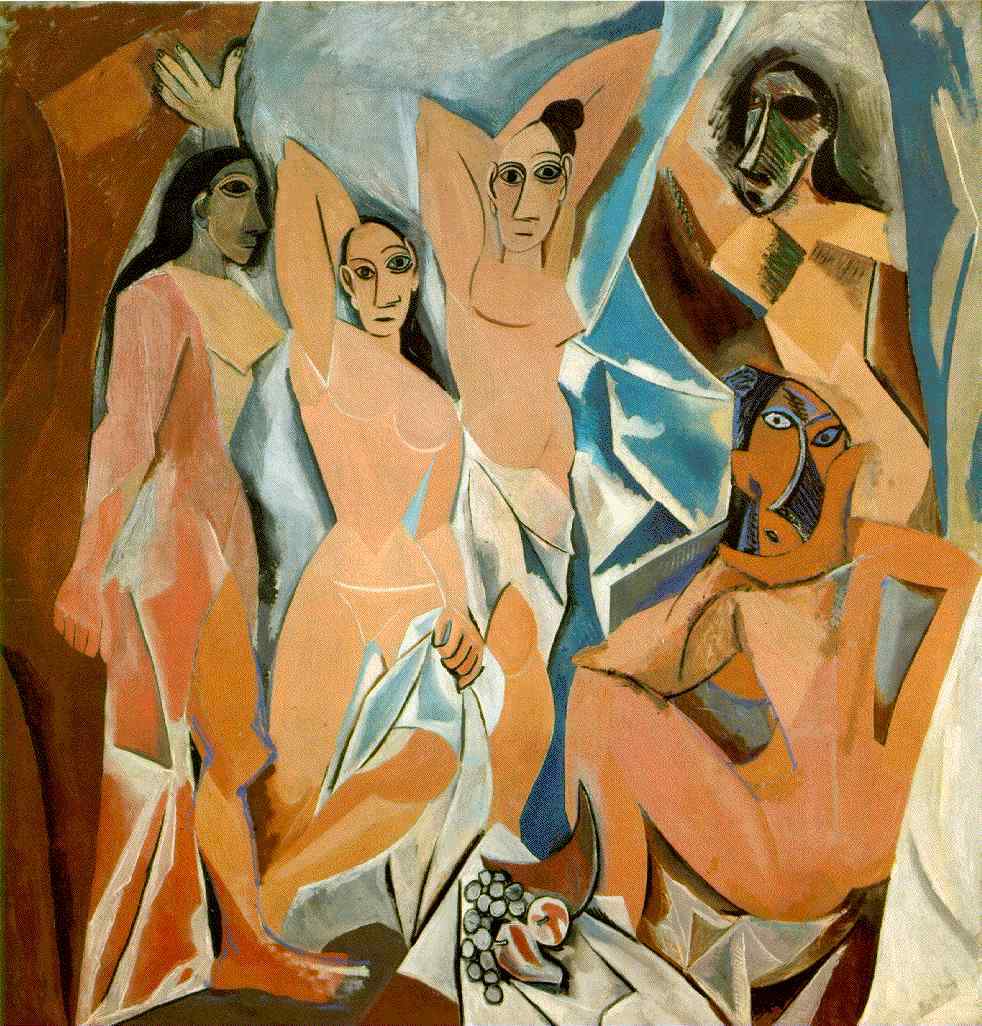
Drawing is not my forte; I can do flowers and rainbows all day long, but drawing even semi-human figures takes some skill that I do not possess. I love and appreciate art, so to try to replicate someone as renowned as Picasso was scary, and then to turn his picture upside down added a layer of difficulty. Though I started strong and confident, I ended my drawing with a recognition of my skills in the area of attention to detail, patience, and planning.
The first thing I tackled when drawing was to section off a piece of the painting, so I only needed to focus on about a 4 inch by 8 inch slice of the photo. I began drawing and realized that I was starting at the top of the paper, but I needed to start at the bottom since I was drawing from the top of the painting. Drawing the top went quickly; I assumed it would go slowly as the faces are at the top, but the speed might have related to my confidence and excitement, which was quickly eroded.
The next thing I tackled was the bodies of the women. I felt good about my plan to section off pieces of the painting, but that plan fell apart when I got to the bodies. I noticed how the painting's focus on the human figure distorted my ability to draw bodies. It was easy to focus on faces because they were pretty standard with eyes and ears. However, the bodies became a tangled mess as the eye travels to the bottom of the image. That complexity was a detail I missed in my planning; I didn't fully absorb the painting right side up before turning it upside down.
As I neared the bottom, my quiet space became filled with noises of "what's for lunch" and "she's being mean to me." Losing my train of thought, my patience with my poor planning, and my patience with my noisy environment, I quickly wrapped up what I saw at the bottom of the painting. I had lost all interest in the ability to execute this quickly and accurately, despite knowing that I am not a trained, or even semi-trained artist.
While Picasso's goal of this painting is empowerment in simplicity, his figures are not simple to recreate upside down. Changing perspectives did offer a new-found respect for his technique. However, much of my battle was not drawing upside down, but for not studying the painting and all its small details. I thought since I had viewed the painting a hundred times before, I knew what the painting contained. I quickly realized I didn't know the painting at all.
Working on assumptions is a major weakness for a researcher. As a researcher, I will need to be sure that I bring no assumptions to my observations, so that I can see everything that is there. I additionally cannot give up when I cannot "see" things the way I want to see them; I need to have a plan AND be willing to alter the plan, so that I can gather accurate data.
The first thing I tackled when drawing was to section off a piece of the painting, so I only needed to focus on about a 4 inch by 8 inch slice of the photo. I began drawing and realized that I was starting at the top of the paper, but I needed to start at the bottom since I was drawing from the top of the painting. Drawing the top went quickly; I assumed it would go slowly as the faces are at the top, but the speed might have related to my confidence and excitement, which was quickly eroded.
The next thing I tackled was the bodies of the women. I felt good about my plan to section off pieces of the painting, but that plan fell apart when I got to the bodies. I noticed how the painting's focus on the human figure distorted my ability to draw bodies. It was easy to focus on faces because they were pretty standard with eyes and ears. However, the bodies became a tangled mess as the eye travels to the bottom of the image. That complexity was a detail I missed in my planning; I didn't fully absorb the painting right side up before turning it upside down.
As I neared the bottom, my quiet space became filled with noises of "what's for lunch" and "she's being mean to me." Losing my train of thought, my patience with my poor planning, and my patience with my noisy environment, I quickly wrapped up what I saw at the bottom of the painting. I had lost all interest in the ability to execute this quickly and accurately, despite knowing that I am not a trained, or even semi-trained artist.
While Picasso's goal of this painting is empowerment in simplicity, his figures are not simple to recreate upside down. Changing perspectives did offer a new-found respect for his technique. However, much of my battle was not drawing upside down, but for not studying the painting and all its small details. I thought since I had viewed the painting a hundred times before, I knew what the painting contained. I quickly realized I didn't know the painting at all.
Working on assumptions is a major weakness for a researcher. As a researcher, I will need to be sure that I bring no assumptions to my observations, so that I can see everything that is there. I additionally cannot give up when I cannot "see" things the way I want to see them; I need to have a plan AND be willing to alter the plan, so that I can gather accurate data.
Stretch Activity #4: Upside Down Picasso
Picasso is one of my favorite artists; I chose him because I think his cubist period would be fairly easy to draw. Here's the painting I chose to copy, but the rub is to try to draw it while it is upside down:

Here is my version:

Here is my version:

Friday, March 18, 2016
Reflection on Stretch #3
An observation of Walmart on a busy night is challenging. Sometimes people would talk to me as they passed by, while others clutched their merchandise so tightly I could not see what they were buying. The greatest challenge, however, was ignoring the loud child.
My first obstacle came in the way of customer interference. The Walmart in this small town is a hot spot because for many this is a grocery store, a clothing store, an art store, a home store, and a pet store. As such, I often see someone I have taught, worked with, volunteered with, or with whom my daugheters go to school. My active life has allowed very few degrees of separation. However, many times people in this small town are just friendly or observant. A few asked if I was waiting for someone, as if they could help me find said person, while others commented on the warm streak of weather, or the smell wafting from the Subway behind me. Still, others wanted to cut up and laugh, and I am always up for a friendly exchange or laugh.
Another challenge was determining what people were buying. Many people were clutching their purchases so tightly so quickly I had little time to see what they were or even write it down. This speaks to the hustle and bustle that happens in express lines; people expect and feel they need to get through quickly.
My greatest challenge was ignoring the demanding toddler; I found it difficult to NOT know what he was saying, or to try to figure out what motivated him or what he was running toward when he trotted away from Grandma each time. Their relationship was fascinating not just because of the mystery behind his rant, but also because Grandma seemed cool and collected. I was afraid I would miss her sudden burst of frustration or even action. Watching the tiny terror meant I missed recording a few key purchases.
The takeway in observing but not participating is that sometimes you get sucked in. Sometimes, the harder you try to be that fly on the wall, someone still sucks you back in. And other times, you get sucked in by a phenomenon you did not expect. Having a plan is great, but learning to adjust to the unexpected is a more realistic skill for any qualitative researcher.
My first obstacle came in the way of customer interference. The Walmart in this small town is a hot spot because for many this is a grocery store, a clothing store, an art store, a home store, and a pet store. As such, I often see someone I have taught, worked with, volunteered with, or with whom my daugheters go to school. My active life has allowed very few degrees of separation. However, many times people in this small town are just friendly or observant. A few asked if I was waiting for someone, as if they could help me find said person, while others commented on the warm streak of weather, or the smell wafting from the Subway behind me. Still, others wanted to cut up and laugh, and I am always up for a friendly exchange or laugh.
Another challenge was determining what people were buying. Many people were clutching their purchases so tightly so quickly I had little time to see what they were or even write it down. This speaks to the hustle and bustle that happens in express lines; people expect and feel they need to get through quickly.
My greatest challenge was ignoring the demanding toddler; I found it difficult to NOT know what he was saying, or to try to figure out what motivated him or what he was running toward when he trotted away from Grandma each time. Their relationship was fascinating not just because of the mystery behind his rant, but also because Grandma seemed cool and collected. I was afraid I would miss her sudden burst of frustration or even action. Watching the tiny terror meant I missed recording a few key purchases.
The takeway in observing but not participating is that sometimes you get sucked in. Sometimes, the harder you try to be that fly on the wall, someone still sucks you back in. And other times, you get sucked in by a phenomenon you did not expect. Having a plan is great, but learning to adjust to the unexpected is a more realistic skill for any qualitative researcher.
Sunday, March 13, 2016
Stretch Activity #3: Nonparticipant Observation of Walmart Customers
I recently visited Walmart in Nashville, NC for dog food. It was a very busy Friday, so I decided to practice my observation skills and jot down notes about the phenomenon of the large, one-stop superstore.
I decided to sit on a bench by the entrance which housed the deli and the produce to the right of me. This entrance also encompassed the Subway behind me, and the express line directly in front. It was a Friday night around 7:00; I expected the Walmart to be less busy as sports are in full swing and Friday is when people typical go out to eat or the movies, but I also realized it was payday for many, and thus many are hitting Walmart after getting home from work.
This grocery end of the store, with the express line, gave me a quick glimpse into what people buy when they need to run in quickly. Food items were the most common items; however, it wasn't milk or bread but snack items that seemed to be the most common. A few people struggled to hold their items, while one or two of the dozen people had a cart.
I noticed quickly that the majority of the people in the express line were with kids. The two people with the cart had kids, which was logical because the kids typically ride in the cart. Several other kids were standing with an adult; most were between 6 and 10 years old.
The customers in the express line wore a variety of clothing; two women were in scrubs, and one man was in a maintenance uniform. Most of the people in line looked between 30 and 45 years old, and the racial composition was about 50% African American and 50% white, with two children who seemed to have parents of different races. This composition was pretty typical for what I've experience the handful of times I've visited this Walmart in the past five years.
Everyone in the two lines was very distracted by one little boy, probably about 2. He was shouting loudly at a woman who seemed to be his grandmother; his speech was typical for his age, and all I could make out was "I don't know what you talkin' bout." His voice was very guttural; every so often he'd stomp his foot when his grandmother asked him to quit his mess and "come heah before I get your reah when we get home." He'd stomp the same 10 feet, getting about 3 feet to should his line, then run toward the door with his arms up like he was gonna fly. It seems I had started observing in the middle of something, as I couldn't tell what the catalyst was for his rant. Reactions by the customers in line ranged from laughter from the older, childless customers to a stern reprimand from those with kids that they'd better not act like that.
The line seemed to move very slowly; often the cashier had to search for a price on an item. Most people had over ten items, which also meant the wait would be longer. No one seemed overly annoyed about the wait; people would wait to see what grandma would do about her grandson's threatening voice. I wanted to wait to see if grandma was going to make good on her threats, but I had to leave.
I decided to sit on a bench by the entrance which housed the deli and the produce to the right of me. This entrance also encompassed the Subway behind me, and the express line directly in front. It was a Friday night around 7:00; I expected the Walmart to be less busy as sports are in full swing and Friday is when people typical go out to eat or the movies, but I also realized it was payday for many, and thus many are hitting Walmart after getting home from work.
This grocery end of the store, with the express line, gave me a quick glimpse into what people buy when they need to run in quickly. Food items were the most common items; however, it wasn't milk or bread but snack items that seemed to be the most common. A few people struggled to hold their items, while one or two of the dozen people had a cart.
I noticed quickly that the majority of the people in the express line were with kids. The two people with the cart had kids, which was logical because the kids typically ride in the cart. Several other kids were standing with an adult; most were between 6 and 10 years old.
The customers in the express line wore a variety of clothing; two women were in scrubs, and one man was in a maintenance uniform. Most of the people in line looked between 30 and 45 years old, and the racial composition was about 50% African American and 50% white, with two children who seemed to have parents of different races. This composition was pretty typical for what I've experience the handful of times I've visited this Walmart in the past five years.
Everyone in the two lines was very distracted by one little boy, probably about 2. He was shouting loudly at a woman who seemed to be his grandmother; his speech was typical for his age, and all I could make out was "I don't know what you talkin' bout." His voice was very guttural; every so often he'd stomp his foot when his grandmother asked him to quit his mess and "come heah before I get your reah when we get home." He'd stomp the same 10 feet, getting about 3 feet to should his line, then run toward the door with his arms up like he was gonna fly. It seems I had started observing in the middle of something, as I couldn't tell what the catalyst was for his rant. Reactions by the customers in line ranged from laughter from the older, childless customers to a stern reprimand from those with kids that they'd better not act like that.
The line seemed to move very slowly; often the cashier had to search for a price on an item. Most people had over ten items, which also meant the wait would be longer. No one seemed overly annoyed about the wait; people would wait to see what grandma would do about her grandson's threatening voice. I wanted to wait to see if grandma was going to make good on her threats, but I had to leave.
Monday, March 7, 2016
Reflection on Stretch Activity #2
Being a movie monitor had its own set of challenges. As a researcher sitting in the movie, I had to not only adjust to the content of the movie, but the surroundings in which I viewed the movie.
Deadpool was a very violent and graphic movie; though I found many of the scenes requisite to the character's development, these scenes and situations are hard for me because I am a survivor of domestic violence. I have not seen Selma, Twelve Years a Slave, nor many other movies because I struggle with handling violence in that capacity. I have even walked out of several movies because the violence was too much. I became really aware of my discomfort with violence through this stretch activity.
I was required to notice who was around me during the movie as I chose where to sit and how to react to scenes in the movie. Because of the small group viewing the movie, I wasn't as reactive in terms of laughter or fear because I would have been singled out; it is more comfortable to react to something when a larger group will reaffirm or mask my reaction. As I left I noticed a young boy of maybe ten had viewed the movie; had I known that child was in the movie with me, I may not have been able to sit through it. Knowing a young child was witnessing such a graphic movie would have bothered me and I would not have been able to appreciate or enjoy the movie.
I've learned that sometimes I will, as a researcher, be in very uncomfortable situations. I'll need to develop a set of skills to be sure that anyone I interview will feel comfortable with me; I cannot react with horror or withdraw when a focus group or interview detours into uncomfortable territory.
Deadpool was a very violent and graphic movie; though I found many of the scenes requisite to the character's development, these scenes and situations are hard for me because I am a survivor of domestic violence. I have not seen Selma, Twelve Years a Slave, nor many other movies because I struggle with handling violence in that capacity. I have even walked out of several movies because the violence was too much. I became really aware of my discomfort with violence through this stretch activity.
I was required to notice who was around me during the movie as I chose where to sit and how to react to scenes in the movie. Because of the small group viewing the movie, I wasn't as reactive in terms of laughter or fear because I would have been singled out; it is more comfortable to react to something when a larger group will reaffirm or mask my reaction. As I left I noticed a young boy of maybe ten had viewed the movie; had I known that child was in the movie with me, I may not have been able to sit through it. Knowing a young child was witnessing such a graphic movie would have bothered me and I would not have been able to appreciate or enjoy the movie.
I've learned that sometimes I will, as a researcher, be in very uncomfortable situations. I'll need to develop a set of skills to be sure that anyone I interview will feel comfortable with me; I cannot react with horror or withdraw when a focus group or interview detours into uncomfortable territory.
Sunday, February 28, 2016
Stretch Activity #2: The Movie Monitor
The new movie Deadpool is controversial for many reasons. It features an anti-hero who is very violent but lovable. Parents have been taking their young children to see it despite the production company's very public warnings about its content. It is also another movie for Marvel, a company dominating the field of action hero movies, but that doesn't seem to like movies with leading ladies. Since I was unfamiliar with the comic and the character, but I am a fan of most Marvel movies, I decided to go see it this weekend to observe how people react to the movie and if, really, people were taking their small children to this R rated movie.

As I entered the theater, I looked around at the seats. My husband and I got there about 30 minutes before the movie started, and sat near the front at the aisle so I could see everyone walk in. Most people were in their late 20s to early 30s; I saw one double date that may have contained college-aged youth. As this was the fifth or sixth week of the movie, there were maybe only 25 people in the theater on this Friday night.
The movie started in a unique way; the directors and producers showed the audience various zoomed in perspectives of a still shot; as the 3-D picture rotated, the audience got a different perspective of the action. While this went on, the usual names of important people popped up, except they had been given allegorical names like "guy with British accent" and "hot looking ninja woman." The entire picture was quickly in view, and the audience could see that Deadpool was trying to even the score. I thought to myself that maybe this movie wasn't so bad.
However, the movie quickly escalated. After setting the scene Deadpool gets his revenge by chopping off body parts nonchalantly; I had to turn my head in disgust but those in front of me looked head-on at the carnage. No one verbalized much reaction; I heard a few mumbles of reaction that were more surprise than disgust. Although there wasn't a lot of blood or gore, just the sheer rate at which he chopped off body parts with his sword, or maimed a driver with a cigarette lighter, was unfathomable.
I thought this scene would set the tone for the rest of the movie. Using swords to chop body parts and kill "bad" guys wasn't so bad. Deadpool gets reprimanded by the X-Men, who come to haul him away for his ruthless killings; Deadpool cuts his own hand off to get free. Deadpool had upped the ante.
Further into the plot the audience learns of Deadpool's history; he apparently was diagnosed with cancer and was offered experimental treatment by an anonymous suit. He signs up for the treatment in hopes that he can return to his simple life with his love, in their tiny apartment in which a gratuitous sex scene montage shows the span of their relationship over several holidays.
The experimental treatment of Deadpool was the most uncomfortable for me; the audience quickly became silent as Deadpool was tortured in what wasn't a treatment facility, but a private science lab run under suspicious circumstances. The torture scenes were very real as he was stored in an ice chest, electrocuted, and whipped; these were scenes I only peeked at, hoping they would end. Very few of the audience members seemed disturbed by this long series of scenes. Throughout the scenes though, Deadpool's twisted sarcasm and sense of humor permeated.
By the end of the movie, Deadpool is reunited with his love interest and exacts revenge on his torturer. His love interest accepts his scars and they live "happily ever after." Deadpool even alludes to a sequel as he talks directly to the audience often. As the lights were on, a few people walked out seeming to have enjoyed the movie. Around half stayed to watch the full ending for clues about a sequel. Just as I got up to walk out, a family with a boy of around eleven left the theater; a child was, after all, viewing the movie... the urban legend had been a reality.

As I entered the theater, I looked around at the seats. My husband and I got there about 30 minutes before the movie started, and sat near the front at the aisle so I could see everyone walk in. Most people were in their late 20s to early 30s; I saw one double date that may have contained college-aged youth. As this was the fifth or sixth week of the movie, there were maybe only 25 people in the theater on this Friday night.
The movie started in a unique way; the directors and producers showed the audience various zoomed in perspectives of a still shot; as the 3-D picture rotated, the audience got a different perspective of the action. While this went on, the usual names of important people popped up, except they had been given allegorical names like "guy with British accent" and "hot looking ninja woman." The entire picture was quickly in view, and the audience could see that Deadpool was trying to even the score. I thought to myself that maybe this movie wasn't so bad.
However, the movie quickly escalated. After setting the scene Deadpool gets his revenge by chopping off body parts nonchalantly; I had to turn my head in disgust but those in front of me looked head-on at the carnage. No one verbalized much reaction; I heard a few mumbles of reaction that were more surprise than disgust. Although there wasn't a lot of blood or gore, just the sheer rate at which he chopped off body parts with his sword, or maimed a driver with a cigarette lighter, was unfathomable.
I thought this scene would set the tone for the rest of the movie. Using swords to chop body parts and kill "bad" guys wasn't so bad. Deadpool gets reprimanded by the X-Men, who come to haul him away for his ruthless killings; Deadpool cuts his own hand off to get free. Deadpool had upped the ante.
Further into the plot the audience learns of Deadpool's history; he apparently was diagnosed with cancer and was offered experimental treatment by an anonymous suit. He signs up for the treatment in hopes that he can return to his simple life with his love, in their tiny apartment in which a gratuitous sex scene montage shows the span of their relationship over several holidays.
The experimental treatment of Deadpool was the most uncomfortable for me; the audience quickly became silent as Deadpool was tortured in what wasn't a treatment facility, but a private science lab run under suspicious circumstances. The torture scenes were very real as he was stored in an ice chest, electrocuted, and whipped; these were scenes I only peeked at, hoping they would end. Very few of the audience members seemed disturbed by this long series of scenes. Throughout the scenes though, Deadpool's twisted sarcasm and sense of humor permeated.
By the end of the movie, Deadpool is reunited with his love interest and exacts revenge on his torturer. His love interest accepts his scars and they live "happily ever after." Deadpool even alludes to a sequel as he talks directly to the audience often. As the lights were on, a few people walked out seeming to have enjoyed the movie. Around half stayed to watch the full ending for clues about a sequel. Just as I got up to walk out, a family with a boy of around eleven left the theater; a child was, after all, viewing the movie... the urban legend had been a reality.
Wednesday, February 17, 2016
Reflection on Stretch #1
My first venture into qualitative research involved interviewing someone on Google Hangout. I had many fears about this technique, but I had even more fears about the person I interviewed, and the type of questions I asked.

My major fear with Google hangout as an interview was interference. I anticipated interference from my children, or interference from barking pets. I also worried about a lag in the video. Both these things could affect my ability to accurately record body language or words. Luckily, neither of these impacted my study, but technological glitches did wreak havoc on recording the video.
I was most uncomfortable with the person I interviewed. I had set up to interview the college's new advising coordinator so that I could learn more about what she plans to implement regarding advising. However, her child was sick and so my colleague and fellow English Instructor, Ms. L., filled in. We are friends on social media, and when my original interviewee cancelled I asked a few friends to help out; she was the first to volunteer.
Ms. L is a mother figure at work; she is a very gentle soul who always does what is best for her students. We frequently attend meetings together, and often I am in charge of implementing unfriendly initiatives. I did not have time to really think about how our working relationship might impact the interview. When I asked her the question "what do you dislike about your job," she mentioned meetings. I instantly tensed up, knowing that a most recent meeting I led was met with very unfriendly faces. I hoped that it didn't show on my face, but I don't know that it didn't. She further explained why she didn't like them, and as such I tried to be sure to remain neutral and use very welcoming body language. I didn't want to influence her answers.
I learned a valuable lesson about qualitative research: be prepared to be uncomfortable. Sometimes, you will not hear what you want to hear, or what you enjoy. Your goal must be to record the person's message, and remaining welcoming to that message. Otherwise, you will taint your data and even damage your study. Worse than that, you could make that person lose all sense of self.
This meshes with what Robert K. Yin (2013) says about case study. Yin, in his book on case study research methods, urges that case study seems easier, but in fact, the intimate contact with humans makes it more difficult, and thus more imperative that researchers take it seriously.
References
Yin, R. K. (2013). Case study research: Design and methods. Sage publications.

My major fear with Google hangout as an interview was interference. I anticipated interference from my children, or interference from barking pets. I also worried about a lag in the video. Both these things could affect my ability to accurately record body language or words. Luckily, neither of these impacted my study, but technological glitches did wreak havoc on recording the video.
I was most uncomfortable with the person I interviewed. I had set up to interview the college's new advising coordinator so that I could learn more about what she plans to implement regarding advising. However, her child was sick and so my colleague and fellow English Instructor, Ms. L., filled in. We are friends on social media, and when my original interviewee cancelled I asked a few friends to help out; she was the first to volunteer.
Ms. L is a mother figure at work; she is a very gentle soul who always does what is best for her students. We frequently attend meetings together, and often I am in charge of implementing unfriendly initiatives. I did not have time to really think about how our working relationship might impact the interview. When I asked her the question "what do you dislike about your job," she mentioned meetings. I instantly tensed up, knowing that a most recent meeting I led was met with very unfriendly faces. I hoped that it didn't show on my face, but I don't know that it didn't. She further explained why she didn't like them, and as such I tried to be sure to remain neutral and use very welcoming body language. I didn't want to influence her answers.
I learned a valuable lesson about qualitative research: be prepared to be uncomfortable. Sometimes, you will not hear what you want to hear, or what you enjoy. Your goal must be to record the person's message, and remaining welcoming to that message. Otherwise, you will taint your data and even damage your study. Worse than that, you could make that person lose all sense of self.
This meshes with what Robert K. Yin (2013) says about case study. Yin, in his book on case study research methods, urges that case study seems easier, but in fact, the intimate contact with humans makes it more difficult, and thus more imperative that researchers take it seriously.
References
Yin, R. K. (2013). Case study research: Design and methods. Sage publications.
Friday, February 12, 2016

Sunday, January 31, 2016
Qualitatively Liberal Arts
I have, since my entry into the public school system at age four, been a liberal arts girl. I'd swap any math problem for a glimpse at a good book, or paper and pencil to write something inspiring. However, the liberal arts require an immense amount of critical thinking, and what most in the general public fail to realize is the liberals arts are threatened by tight budgets and big business despite their ability to craft critical thinking skills in its participants.
Part of being a liberal arts girl is that I like thinking about things. I enjoy solving problems efficiently and effectively; sometimes I secretly solve problems no one knows exists, or no one cares about. I often lack any ability to read research without thinking of five billion questions that I still have, or three million ways I would have researched the topic differently. Perhaps my upbringing on a farm nurtured my critical thinking skills, but perhaps I was, too, born a liberal arts girl. Either way, I love dissecting the written word, and I love finding the perfect word to write. This is why my colleagues are always baffled at how much I enjoy, understand, and absorb all types of research.
While I do not fear crunching numbers, my true passion is interpreting them. The numbers are merely the secret code to a larger story. I was drawn to literature as a major because literature contains all the great stories, and those stories are equal opportunity stories (says Carl Jung's theory on the collective unconsciousness). And human stories (as opposed to particle stories, or rock stories) are the most fascinating of all the stories in this realm.
As I experienced the epiphany of doctoral work and its relationship to career advancement, I never imagined I would persevere in a doctorate program with a strong research component like an educational doctorate. My plan was, always, to pursue my Ph.D. in World Literature or Gender Study or Poetry. However, I could not deny the power in research, and in order to exact change in education - and let the liberal arts lovers continue to have liberal arts available - I needed a program strong in research pedagogy.
I do have a research background; part of my master's thesis involved the use of reader response theory and cloze sentences as therapy for adolescent male sex offenders with emotional disabilities in a language arts classroom. However, that experience was not without its challenges. First and foremost, my thesis chair could not understand using this theory in partnership with special education theory; her Ph.D. in Rhetoric afforded her no frame of reference for educational pedagogy in special education. Although I loved the research, working with the students in their small focus groups, and collaborating with the therapist on poetry, I was disappointed in the dismissal of educational pedagogy as valuable. I did finally get my thesis approved, but only through the insistence of my education professor. This made me hesitant to do any more research.
I fear the research process because it is only as useful as those who read and can understand it. I fear that my ideas are only as relevant as the words I choose to write about them, making the liberal arts so essential in the space of education. The most challenging part of my doctoral experience is the inability of others in higher education to see that the lines between disciplines are merely suggestions; research from multiple perspectives and theories can exact change. While I know that boundaries are necessary, they should not be permanent. Higher education faculty should realize the freedom in reevaluating the boundaries; it is in these uncomfortable spaces that we can find what we didn't know we were looking for.
Part of being a liberal arts girl is that I like thinking about things. I enjoy solving problems efficiently and effectively; sometimes I secretly solve problems no one knows exists, or no one cares about. I often lack any ability to read research without thinking of five billion questions that I still have, or three million ways I would have researched the topic differently. Perhaps my upbringing on a farm nurtured my critical thinking skills, but perhaps I was, too, born a liberal arts girl. Either way, I love dissecting the written word, and I love finding the perfect word to write. This is why my colleagues are always baffled at how much I enjoy, understand, and absorb all types of research.
While I do not fear crunching numbers, my true passion is interpreting them. The numbers are merely the secret code to a larger story. I was drawn to literature as a major because literature contains all the great stories, and those stories are equal opportunity stories (says Carl Jung's theory on the collective unconsciousness). And human stories (as opposed to particle stories, or rock stories) are the most fascinating of all the stories in this realm.
As I experienced the epiphany of doctoral work and its relationship to career advancement, I never imagined I would persevere in a doctorate program with a strong research component like an educational doctorate. My plan was, always, to pursue my Ph.D. in World Literature or Gender Study or Poetry. However, I could not deny the power in research, and in order to exact change in education - and let the liberal arts lovers continue to have liberal arts available - I needed a program strong in research pedagogy.
I do have a research background; part of my master's thesis involved the use of reader response theory and cloze sentences as therapy for adolescent male sex offenders with emotional disabilities in a language arts classroom. However, that experience was not without its challenges. First and foremost, my thesis chair could not understand using this theory in partnership with special education theory; her Ph.D. in Rhetoric afforded her no frame of reference for educational pedagogy in special education. Although I loved the research, working with the students in their small focus groups, and collaborating with the therapist on poetry, I was disappointed in the dismissal of educational pedagogy as valuable. I did finally get my thesis approved, but only through the insistence of my education professor. This made me hesitant to do any more research.
I fear the research process because it is only as useful as those who read and can understand it. I fear that my ideas are only as relevant as the words I choose to write about them, making the liberal arts so essential in the space of education. The most challenging part of my doctoral experience is the inability of others in higher education to see that the lines between disciplines are merely suggestions; research from multiple perspectives and theories can exact change. While I know that boundaries are necessary, they should not be permanent. Higher education faculty should realize the freedom in reevaluating the boundaries; it is in these uncomfortable spaces that we can find what we didn't know we were looking for.
Subscribe to:
Posts (Atom)